- 1. What Is a 30 60 90 Day Plan?
- 2. Who Needs a 30 60 90 Day Plan?
- 3. Breaking Down the Three Phases of a 30 60 90 Day Plan
- 4. How to Write a 30 60 90 Day Plan Step by Step
- 5. 30 60 90 Day Plan Examples by Role
- 6. How to Present Your 30 60 90 Day Plan (And Win the Room)
- 7. Common Mistakes to Avoid in Your 30 60 90 Day Plan
- 8. Use a Ready-Made 30 60 90 Day Plan Template from SlidePick
- 9. Frequently Asked Questions About 30 60 90 Day Plans
- Final Thoughts: Your First 90 Days Can Define Your Next Few Years

- 1. What Is a 30 60 90 Day Plan?
- 2. Who Needs a 30 60 90 Day Plan?
- 3. Breaking Down the Three Phases of a 30 60 90 Day Plan
- 4. How to Write a 30 60 90 Day Plan Step by Step
- 5. 30 60 90 Day Plan Examples by Role
- 6. How to Present Your 30 60 90 Day Plan (And Win the Room)
- 7. Common Mistakes to Avoid in Your 30 60 90 Day Plan
- 8. Use a Ready-Made 30 60 90 Day Plan Template from SlidePick
- 9. Frequently Asked Questions About 30 60 90 Day Plans
- Final Thoughts: Your First 90 Days Can Define Your Next Few Years


1. What Is a 30 60 90 Day Plan?
A 30 60 90 day plan is a written roadmap that outlines what you intend to learn, accomplish, and lead during the first three months of a new role or project. It is divided into three distinct phases, each lasting roughly 30 days, and each with a different focus: understanding, contributing, and driving results.
Think of it like the difference between moving into a new neighborhood and actually becoming part of it. In the first 30 days you are still figuring out where the grocery store is. By day 60, you know your neighbors by name. And by day 90, you are the one organizing the block party. That is the arc a good plan captures.
The plan typically includes your goals for each phase, specific actions you will take to achieve them, and measurable metrics that will tell you whether you are on track. It is widely used in job interviews, onboarding, sales roles, and leadership transitions.
| QUICK DEFINITION A 30 60 90 day plan is a structured goal-setting document that maps out your priorities and actions across the first 30, 60, and 90 days of a new job, role, or major initiative. It aligns your expectations with your employer’s, demonstrates strategic thinking, and helps you build momentum from day one. |
The format can be a simple document, a one-pager, or a slide deck depending on the context. If you are presenting to a hiring manager or leadership team, a clean presentation always makes a stronger impression than a wall of text.
2. Who Needs a 30 60 90 Day Plan?
Honestly, more people than you might expect. This is not just a tool for senior executives or salespeople walking into a high-stakes interview. It is genuinely useful any time you are stepping into something new and want to hit the ground running instead of just hoping things work out.
Here are the people who benefit most from building one:
- Job candidates in competitive interviews, especially for management, sales, or executive roles where showing strategic thinking is part of the evaluation.
- New employees who want to onboard faster, build trust with their manager, and avoid the passive “waiting to be told what to do” trap.
- Sales professionals starting a new territory or joining a new company, who need to ramp up revenue as quickly as possible.
- Managers and team leaders stepping into a new department, where relationships and credibility matter before results can happen.
- Executives and C-suite leaders who are expected to create organizational impact quickly and need a clear framework for their priorities.
- Freelancers and consultants kicking off a major client engagement who want to set clear expectations from day one.
- Entrepreneurs and founders launching a new product, entering a new market, or structuring a significant operational shift.
If you are reading this because you just landed a new job, or because you have an important interview coming up and someone told you to prepare one of these, you are in exactly the right place. By the time you finish this article, you will know what to write and how to make it look great.
3. Breaking Down the Three Phases of a 30 60 90 Day Plan
Each phase has a purpose. They are not arbitrary time slices. They reflect how people actually integrate into new environments: first you absorb, then you apply, then you lead. Here is what each phase means in practice.
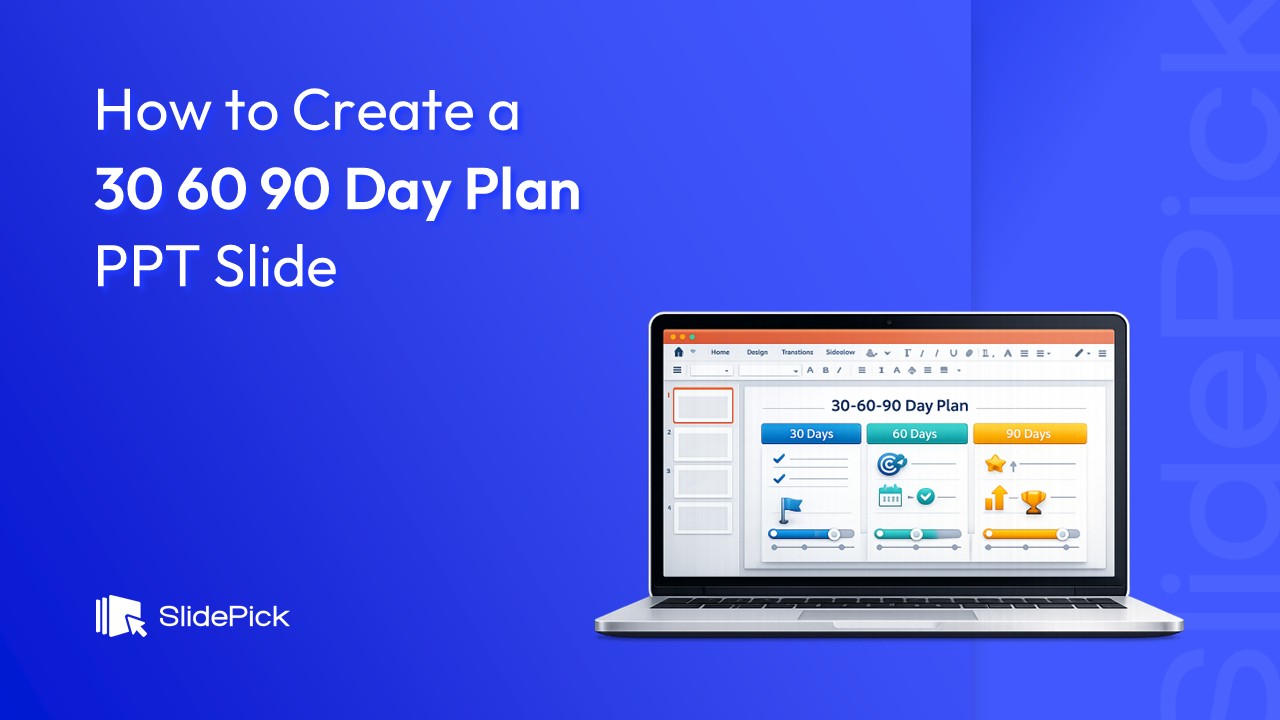
| PHASE 1 | Days 1-30 Learn Absorb the culture, understand the processes, build relationships, and identify where the real problems and opportunities live. | PHASE 2 | Days 31-60 Contribute Start taking ownership of tasks, apply your insights from phase one, and deliver early wins that build your credibility. | PHASE 3 | Days 61-90 Lead Drive results independently, mentor others, propose improvements, and establish yourself as someone here to make a lasting difference. |
Phase 1: Days 1 to 30 (Learn)
The first 30 days are about listening more than talking. Your job is to understand the landscape before you try to change anything. This means getting to know the people you work with, understanding the tools and systems in place, reviewing existing documentation, and identifying where things are working well and where the gaps are.
A lot of ambitious people stumble in this phase by moving too fast. You walk in with big ideas from your last job and start suggesting changes before you truly understand why things are the way they are. Sometimes there is a very good reason a process looks clunky from the outside. Take the time to ask questions and listen properly before you start offering solutions.
Key activities for the first 30 days typically include: introducing yourself to all key stakeholders, scheduling one-on-one meetings with your direct team and manager, reviewing company strategy and departmental goals, shadowing experienced team members, and completing all required onboarding.
Phase 2: Days 31 to 60 (Contribute)
By day 31, you should have enough context to start delivering real value. This is the phase where you pick up ownership of tasks, identify at least one or two quick wins that you can execute well, and start demonstrating your competence in concrete, visible ways.
Quick wins are important here, and not just for your confidence. They signal to the people around you that you are capable, reliable, and ready to take on more. They also help you build the trust that makes everything else easier down the road. Pick something meaningful but achievable, execute it well, and let the results speak for you.
This phase also involves deeper relationship-building, starting to understand the organizational landscape, and aligning with your manager on what success looks like in your role over the long term.
Phase 3: Days 61 to 90 (Lead)
The final phase is where you shift from someone who is “getting up to speed” to someone actively driving the work forward. Whether you are an individual contributor or a manager, this is when you start proposing initiatives, leading projects, and taking responsibility for outcomes rather than just tasks.
Day 90 is also a great time to sit down with your manager and do a genuine check-in. Ask for feedback. Share what you are proud of and what you are still figuring out. The people who build the fastest trust in new environments are usually the ones willing to be honest about both their wins and their blind spots.]
4. How to Write a 30 60 90 Day Plan Step by Step
Writing a strong 30 60 90 day plan is less about following a rigid template and more about demonstrating genuine thinking about the role and the organization. Here is a step-by-step process that works whether you are writing this for an interview or for your first week on the job.
- Research the company and role deeply before you write anything Go beyond the job description. Read recent press releases, earnings reports if available, LinkedIn posts from the team, and any public content from the leadership. The more context you bring in, the more specific and compelling your plan will be.
- Identify the core objectives for each phase For each 30-day window, identify two to four meaningful objectives. Keep them ambitious but realistic. Vague objectives like “build relationships” should be made specific: “schedule one-on-one conversations with all five department heads by day 20.”
- List the specific actions you will take to achieve each objective For every goal, outline three to five concrete actions that start with a verb: “complete,” “meet with,” “analyze,” “propose,” “deliver.” This level of specificity shows you have thought through the work, not just the outcome.
- Define how you will measure success Add metrics wherever possible. “Increase pipeline by 20%,” “onboard three new accounts,” “reduce response time by 15%.” Numbers make goals real and show that you understand accountability. Even soft goals can have measurable indicators.
- Identify the resources or support you will need A great plan does not pretend everything will happen in a vacuum. Acknowledge the people, tools, access, or information you will need to succeed. This shows self-awareness and helps set realistic expectations with your manager from the start.
- Format it cleanly and review it for clarity Whether you write it as a document or a deck, make sure it is easy to scan. Use headers, bullet points, and white space generously. If someone can read the key points in two minutes, your plan is formatted well.
5. 30 60 90 Day Plan Examples by Role
To make this more tangible, here are condensed examples of what a 30 60 90 day plan looks like across four common roles. These are not complete plans, just illustrative snapshots of the kinds of goals and actions you might include.
| Role | Days 1-30 (Learn) | Days 31-60 (Contribute) | Days 61-90 (Lead) |
| Sales Manager | Shadow top reps, review pipeline, meet each team member one-on-one, audit CRM usage. | Run weekly team calls, coach underperforming reps, close two personal deals to build credibility. | Propose a new pipeline review cadence, launch a peer mentoring program, hit 85% of team quota target. |
| Marketing Manager | Audit active campaigns, review past performance data, meet with sales and product teams, map customer personas. | Launch one new content initiative, optimize underperforming campaigns, align on Q2 calendar with leadership. | Present a full-funnel strategy proposal, own demand generation reporting, lead the first cross-functional campaign. |
| Software Engineer | Complete onboarding, read all technical documentation, make first small code contributions, attend team standups. | Own a medium-complexity feature end to end, pair with senior engineers, contribute meaningfully to code reviews. | Lead a sprint, propose a technical improvement, mentor a junior engineer, present work to stakeholders. |
| HR Manager | Review all HR policies, meet department heads, assess hiring pipeline, understand culture and key pain points. | Revise one key HR process, begin a pulse survey initiative, present listening session findings to leadership. | Propose a new retention program, overhaul the onboarding experience, deliver the first quarterly people metrics report. |
Notice that none of these plans promise to “transform the company” in the first month. The best plans are ambitious without being delusional. They show that you understand trust and context come before impact, and that earning the right to lead takes a little time even when you are talented and motivated.
6. How to Present Your 30 60 90 Day Plan (And Win the Room)
Writing the plan is only half the work. Presenting it confidently and clearly is what actually makes the impression stick. Whether you are sharing it in a job interview or in your first week with a new team, here is how to walk people through it in a way that lands well.
| A plan is only as powerful as your ability to communicate it. People do not just hire or promote the best plan. They invest in the person who can clearly articulate what they will do and why. Common wisdom in leadership coaching and executive search |
Lead with the “why” before the “what”
Before you dive into your specific goals, spend a minute explaining why you structured the plan the way you did. What did you learn about the company that shaped your thinking? What gap or opportunity did you identify that you are designing this plan around? That context makes everything that follows feel grounded and considered rather than just a list of tasks you pulled from a template.
Walk through each phase briefly, not exhaustively
You do not need to read every bullet point out loud. Highlight the one or two goals per phase that are most relevant to the conversation in the room. Leave space for the other person to ask questions, which is usually where the most valuable dialogue happens anyway.
Invite pushback and dialogue
One of the most powerful things you can do when presenting a 30 60 90 day plan is to explicitly invite the hiring manager or your new team to challenge it. Try saying: “This is based on what I have learned about the role so far. I would love to know if there are things I am missing or if my priorities seem off.” That signals confidence, coachability, and genuine curiosity all at once.
Use a clean, professional presentation format
A polished deck makes a real difference. If you are walking someone through your plan on slides, the visual design communicates competence and care before you say a single word. That is exactly where using a great pre-built template saves you hours while making the whole thing look intentional and considered.
| 🎯 Skip the Blank Slide Anxiety with SlidePick SlidePick offers professionally designed 30 60 90 day plan presentation templates that are ready to customize in minutes. Stop spending hours wrestling with slide layouts and spend that time on the content that actually matters: your strategy. Browse 30 60 90 Day Plan Templates on SlidePick.com |
7. Common Mistakes to Avoid in Your 30 60 90 Day Plan
Let’s be real: most 30 60 90 day plans are pretty generic. They all say things like “build relationships with stakeholders” and “understand the company culture.” Those are fine goals, but they do not tell anyone anything interesting about how you think or what you will actually do differently. Here are the most common mistakes people make and how to sidestep them.
| Common Mistake | Why It Hurts | What to Do Instead |
| Being too vague | Generic goals make you look unprepared and interchangeable with every other candidate. | Use specific, measurable outcomes tied to the actual role and company context. |
| Overpromising in phase one | Claiming you will transform the department in 30 days signals poor judgment, not ambition. | Keep early phases focused on learning and relationship-building. |
| Ignoring metrics | Plans without numbers are hard to evaluate and easy to dismiss after the conversation ends. | Tie every major goal to a measurable indicator of success. |
| Treating it as a one-time document | If you write it and forget it, it helps no one including yourself. | Review and update the plan regularly with your manager throughout the 90 days. |
| Using a cluttered or messy format | A hard-to-read plan signals poor communication skills, which is the last thing you want. | Use a clean, well-designed template that makes content easy to scan quickly. |
| Copying a template without customizing | Experienced managers can spot a generic plan immediately. It works against you. | Reference specific company challenges, goals, and context throughout your plan. |
| WATCH OUT One mistake that is especially common in interview settings: creating a plan so locked-in and detailed that you come across as inflexible. A great plan demonstrates strategic thinking, but it should also signal that you are open to learning things that will shift your approach. Leave room for iteration and show you welcome input. |
8. Use a Ready-Made 30 60 90 Day Plan Template from SlidePick
If you have made it this far, you have a solid understanding of what a 30 60 90 day plan is, how to structure it, and how to present it effectively. Now comes the part most people spend way too long on: making it look good.
Here is the thing. You could spend three hours fighting with PowerPoint, nudging text boxes around, trying to find a color palette that does not look terrible, and end up with something that looks like it was made in 2009. Or you could spend 20 minutes customizing a professionally designed template and have something you are genuinely proud to hand over in an interview or put in front of your new team.
SlidePick is a presentation template resource built for exactly this kind of situation. Our 30 60 90 day plan templates are clean, modern, and structured to match the framework we have covered throughout this article. Each template includes dedicated slides for:
- An executive summary slide that sets the context for the whole plan right from the start.
- Individual phase slides for each 30-day period with room for goals, actions, and metrics.
- A visual timeline so your audience can see the full arc of your plan at a glance.
- A “resources needed” section that shows you have thought through the full picture, not just your own actions.
- A closing slide with your key success metrics and how you will measure progress over time.
What stands out about SlidePick’s approach is that the templates are designed to be customized, not just filled in. The layouts are flexible enough to work across different industries and roles, and they look polished without being flashy or distracting. The design supports your content rather than competing with it, which is exactly what you want when the goal is to let your thinking shine through.
9. Frequently Asked Questions About 30 60 90 Day Plans
Here are answers to the questions people ask most often when putting together their first 30 60 90 day plan.
Q: What is a 30 60 90 day plan exactly?
A 30 60 90 day plan is a structured document or presentation that outlines your goals, priorities, and actions for the first three months of a new role or major project. It is divided into three 30-day phases: learning and listening, contributing and delivering early wins, and leading and driving results independently. It is used to demonstrate strategic thinking in interviews and to set clear expectations during onboarding.
Q: How long should a 30 60 90 day plan be?
The right length depends on the context. As a written document, one to two pages is usually enough. As a slide presentation, 6 to 12 slides tends to work well: one overview slide, two to three per phase, and a closing summary. The goal is clarity and impact, not exhaustiveness.
Q: Should I bring a 30 60 90 day plan to a job interview without being asked?
Yes, in most cases this is a very strong move, especially for senior, management, or sales roles. It signals preparation, strategic thinking, and genuine interest. Frame it as “something I put together based on my research so far” and invite the interviewer to push back or correct your assumptions. That turns the plan into a conversation starter rather than a declaration.
Q: What is the difference between a plan for a new employee vs. one for an interview?
The structure is largely the same, but the level of specificity differs. A plan created for an interview is based on external research, so frame your goals as working hypotheses you plan to validate once inside. A plan for your first week can be more specific and should be co-developed with your manager. Both should be treated as living documents you revisit regularly.
Q: What metrics should I include in a 30 60 90 day plan?
Your metrics should be tied to the outcomes that matter in your specific role. For sales: pipeline value, accounts contacted, deals closed. For marketing: campaign performance, traffic targets, qualified leads. For operations: process efficiency improvements, team satisfaction, project completion rates. If you cannot measure it, you cannot manage it, so find an indicator for every major goal.
Q: Can I use a 30 60 90 day plan template?
Absolutely. Starting from a well-designed template saves hours of formatting time and gives you a structural framework to customize with your specific goals and research. The key is to genuinely personalize it rather than filling in generic placeholders. A template is a starting point, not a finished product. SlidePick offers excellent pre-built 30 60 90 day plan templates that are clean, professional, and easy to tailor for any role.
Q: How do I present a 30 60 90 day plan in an interview?
Start by explaining what research informed your plan. Walk through each phase at a high level, highlighting one or two key goals per phase. Avoid reading every bullet out loud. Speak to your thinking and invite the interviewer’s input. End by asking whether your priorities align with what they are hoping you will focus on. This turns the plan from a monologue into a conversation.
Final Thoughts: Your First 90 Days Can Define Your Next Few Years
There is a reason career coaches, executive recruiters, and hiring managers all talk about the importance of the first 90 days. The patterns you establish early, how you communicate, how you build trust, how you prioritize and deliver, tend to stick. People form their impressions of you quickly, and those impressions are much harder to change later than most people realize.
A well-crafted 30 60 90 day plan does not guarantee a perfect start, but it dramatically improves your odds. It forces you to think clearly about what you want to achieve, helps you align early with the people who matter, and gives you a framework to hold yourself accountable when things get busy and chaotic, which they will.
The process of writing the plan is almost as valuable as the plan itself. It makes you sharper, more intentional, and better prepared for the conversations that will shape your first three months in a new role.
And when you are ready to put it into a format that looks as polished as the thinking behind it, head over to SlidePick. Our 30 60 90 day plan templates are built for people who want to make a great first impression without spending a week designing slides from scratch. Which, let’s be honest, is almost everyone.
| YOUR NEXT STEP Download a free 30 60 90 day plan template from SlidePick.com, fill it in using the framework from this article, and bring it to your next interview or your first week on the job. You will be more prepared than the vast majority of people in the room. Visit SlidePick.com to get started. |
Related Articles
 March 31st, 2026
The Complete Guide to Professional Meeting Minutes Format Templates
Uncategorized- March 31st, 2026
SlidePick: Moving from Mobile App to Presentation Templates
Uncategorized