- What Is a Personal SWOT Analysis?
- Why a Personal SWOT Analysis Is Important
- How to Conduct a Personal SWOT Analysis (Step by Step)
- Personal SWOT Analysis Examples Across Different Situations
- How a Personal SWOT Analysis Helps You Take Advantage of Opportunities
- Using SWOT Analysis for Personal and Professional Life
- How This Differs from Competitive Analysis and PEST Analysis
- Components of SWOT Analysis: What Makes Each Section Strong
- Benefits of Conducting a Personal SWOT Analysis
- PowerPoint Templates to Present Your Personal Evaluation SWOT Analysis
- Conclusion: Start With One Goal, One Honest Analysis
- FAQ’S About Personal SWOT Analysis
10 Real Personal SWOT Analysis Examples (And How to Actually Use Them for Achieving Your Goals)

- What Is a Personal SWOT Analysis?
- Why a Personal SWOT Analysis Is Important
- How to Conduct a Personal SWOT Analysis (Step by Step)
- Personal SWOT Analysis Examples Across Different Situations
- How a Personal SWOT Analysis Helps You Take Advantage of Opportunities
- Using SWOT Analysis for Personal and Professional Life
- How This Differs from Competitive Analysis and PEST Analysis
- Components of SWOT Analysis: What Makes Each Section Strong
- Benefits of Conducting a Personal SWOT Analysis
- PowerPoint Templates to Present Your Personal Evaluation SWOT Analysis
- Conclusion: Start With One Goal, One Honest Analysis
- FAQ’S About Personal SWOT Analysis


I remember the first time someone told me to do a personal SWOT analysis on myself. I stared at a blank four-box grid for twenty minutes, typed in “good communicator,” and called it a day. It was basically useless.
That is the problem with most guides on personal SWOT analysis examples out there. They give you a generic template with placeholder words, or they bury you in theory without showing you what a real, honest, and useful one actually looks like in practice.
In this post, I am going to fix that. I will walk you through what a personal SWOT analysis is, why it is important, show you concrete personal swot analysis examples across different life situations, explain how to conduct a personal SWOT analysis step by step, point out the common mistakes that kill the value, and share templates that make the whole process much faster. Whether you are a student, a mid-career professional, or someone just trying to get clearer on your personal goals, there is something here you can use today.
What Is a Personal SWOT Analysis?
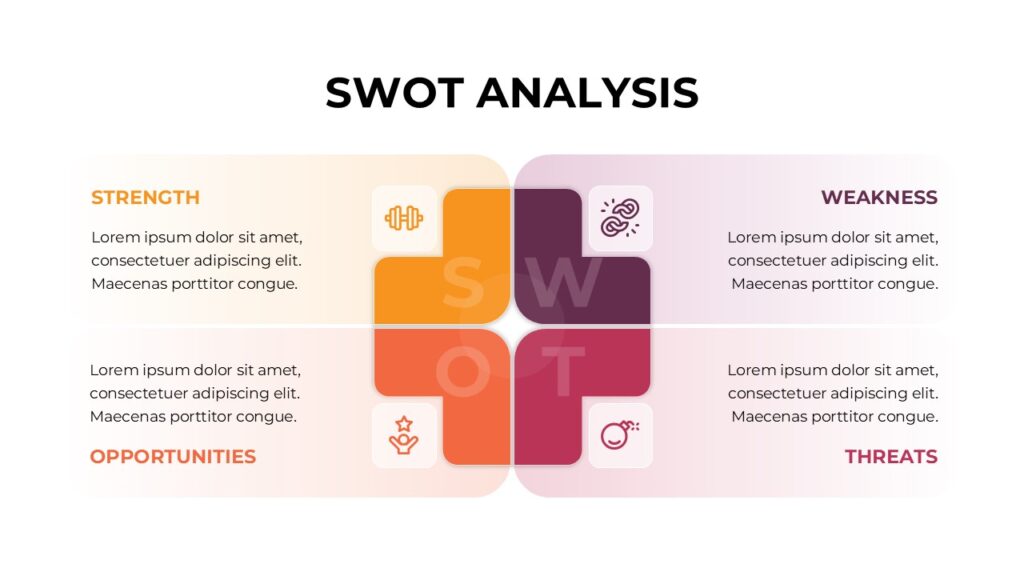
A personal SWOT analysis is a self-assessment framework that helps you evaluate four things: your Strengths, Weaknesses, Opportunities, and Threats. SWOT stands for exactly that. The model was originally developed in the 1960s at Stanford Research Institute for business strategy, but it works just as well for individual use.
A swot matrix applied to a person looks like this:
Strengths are internal factors. These are the skills, habits, and traits you already have that give you an edge in your personal or professional life.
Weaknesses are also internal. These are gaps, blind spots, or patterns that hold you back, things under your direct control that you can improve.
Opportunities are external factors. These are conditions in your environment that you can take advantage of, a growing industry, a mentorship connection, a new certification available to you.
Threats are also external. These are things outside your control that could slow you down, such as a competitive job market, shrinking budgets, or shifting industry demands.
The key difference between a useful personal SWOT analysis and a wasted one is a clear goal sitting at the top. Every item you write must connect back to a specific outcome you are working toward. Without that anchor, a SWOT analysis is just a list of adjectives.
Why a Personal SWOT Analysis Is Important
Using a SWOT analysis for personal growth is one of the most underrated strategic habits a person can build. Here is why it matters.
It helps you identify your real starting point. A good personal SWOT analysis shows you where you actually stand, not where you feel you stand. That gap between perception and reality is where most people get stuck.
It helps you understand internal and external factors at once. Most self-reflection stops at internal factors, your strengths and weaknesses. But a personal SWOT analysis forces you to scan external opportunities and threats too, giving you a full picture of your personal situation.
It is useful across personal and professional life. Whether you are making a career move, setting personal goals, preparing for a job interview, planning a career path, pursuing career growth, or working toward personal development, the swot framework applies. You can use it for a professional pivot as much as for improving your health or relationships.
It gives you an advantage. When you know your personal strengths clearly and have mapped the new opportunities available to you, you stop guessing. You make faster, more confident decisions. Using a swot analysis can help you figure out exactly where to focus your energy rather than spreading it thin.
It is a self-assessment tool that helps you understand yourself. Swot analysis is a self-assessment process that helps you understand both where you currently stand and where you want to go. That clarity alone is worth the 30 minutes it takes to complete.
How to Conduct a Personal SWOT Analysis (Step by Step)
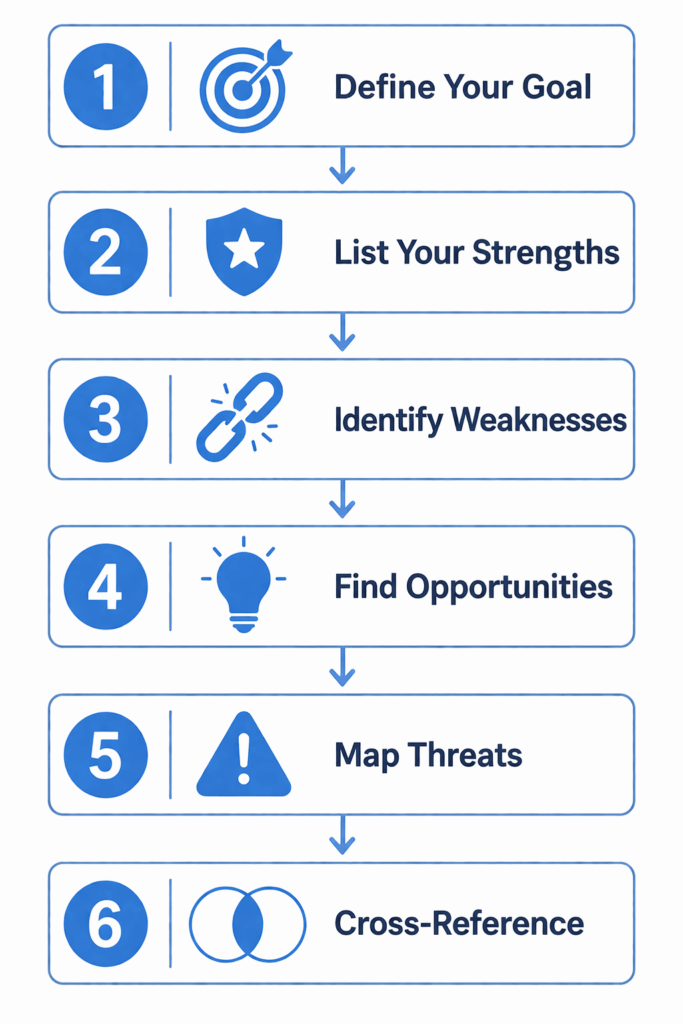
Learning how to conduct a personal SWOT analysis is simpler than most people think. Here is the process I follow and recommend.
Step 1: Define Your Goal Before You Begin
Before you fill in a single box, write the specific question or goal driving the analysis. Examples: “Am I ready to apply for a leadership role?” or “Should I pivot to freelancing full-time?” or “How do I raise my GPA by the end of this term?”
Everything you write in the four quadrants should be relevant to that goal. This is what separates a useful analysis from a vague personality exercise.
Step 2: Brainstorm Your Strengths With Evidence
Do not write “good communicator.” Write “led three client presentations last quarter and closed two deals.” Specific examples make your analysis actionable and credible to yourself.
Ask: What technical skills do I have? What do people consistently praise me for? What personal strengths set me apart?
Step 3: List Your Weaknesses Honestly
Treat your weaknesses as a growth checklist, not a confession. This is the section most people soften too much.
Ask: Where do I consistently fall short? What feedback do I keep receiving? What skills am I avoiding building?
Step 4: Identify External Opportunities
Look beyond yourself. What is happening in your industry, your city, your network? What new opportunities have emerged that you have not yet taken advantage of? Opportunities are external, meaning you cannot create them from scratch, but you can position yourself to take advantage of opportunities that already exist.
This might include emerging job opportunities in your field, a free swot analysis course or certification, a mentor who has offered to help, or a gap in the market you are positioned to fill.
Step 5: Map Out Potential Threats
Be realistic about what could get in your way. Threats are external, meaning they come from outside your control. Potential threats that could affect your progress include increased competition, a shrinking market for your skills, financial pressures, or timing constraints.
Threats are not excuses. They are variables you can plan around once you have identified them clearly.
Step 6: Cross-Reference the Quadrants
This is the step most people skip entirely. After filling in your four boxes, ask: “How can I use Strength A to capture Opportunity B?” and “How can I address Weakness C before Threat D hits?”
This cross-referencing is what turns a personal SWOT analysis into an actual strategic plan with next steps attached, rather than just a reflection that fades by the end of the week.
Personal SWOT Analysis Examples Across Different Situations
Here are detailed personal SWOT analysis examples you can study and adapt for your own situation.
Example 1: Student Preparing for a Job Interview
Goal: Land a marketing internship at a tech startup before the end of the semester.
Strengths: Strong social media skills backed by running a personal brand account with 4,000 followers. Completed two digital marketing courses and earned a Canva certification. Strong written communication and high GPA.
Weaknesses: No formal work experience in a professional setting. Struggles with cold outreach and pitching personal strengths confidently in interviews. Limited knowledge of paid advertising platforms.
Opportunities: Campus career fair happening in six weeks with 15 tech companies attending. A professor with industry connections has offered to review my resume. Growing demand for entry-level social media and content roles. Career growth in digital marketing is strong, with many companies now hiring juniors with portfolio experience.
Threats: Many applicants with prior internship experience competing for the same roles. Competitive hiring window, as most positions get filled early in the academic year.
Next step: Schedule a meeting with the professor this week. Apply to at least five companies before the career fair opens.
Example 2: Mid-Career Professional Planning a Career Change
Goal: Transition from project management into UX design within 12 months.
Strengths: Seven years of experience managing cross-functional teams and understanding user workflows. Self-taught Figma skills with two freelance projects completed. Strong documentation skills carry directly into UX deliverables.
Weaknesses: No formal UX degree or portfolio yet. Tendency to overcommit to the current job, leaving little time for skill-building. Imposter syndrome around calling myself a designer in professional settings.
Opportunities: A part-time online UX bootcamp that fits around a full-time schedule. Several companies in the city actively posting junior UX roles. An employer L&D budget that has never been used. New opportunities exist in product teams that value people with both technical and communication skills.
Threats: The UX market is becoming more competitive as bootcamp graduates enter the field. Salary expectations from a senior PM role may not align with entry-level design salaries. Waiting too long could push the transition beyond the optimal hiring window.
Next step: Apply for the L&D budget this week and enroll in the bootcamp within 30 days.
Example 3: Personal SWOT Analysis Examples for Students (Academic Growth)
Goal: Raise GPA from 3.1 to 3.5 by the end of the academic year.
Strengths: Strong reading comprehension and research skills. Works well in group settings and collaborative projects. Has access to university tutoring and the campus writing center.
Weaknesses: Procrastination, especially on tasks that feel overwhelming at the start. Struggles with math-heavy subjects. Poor sleep schedule affecting focus and retention.
Opportunities: Study groups forming ahead of finals. A professor offering extra credit assignments this semester. A new study planning tool promoted through the student union that could help with consistency.
Threats: Part-time job hours increasing during the holiday season. Exam schedule overlapping with a major family commitment. Social commitments that regularly compete with study time.
Next step: Book one tutoring session per week for maths and commit to a fixed study schedule starting this Monday.
Example 4: Freelancer Wanting to Scale Income
Goal: Double monthly freelance income within six months.
Strengths: Proven track record with five repeat clients. Consistently delivers work ahead of deadlines. Strong referral network from a previous full-time role.
Weaknesses: Undercharging compared to the current market rate. No clear niche, which makes positioning and marketing difficult. Inconsistent lead generation between active projects.
Opportunities: Growing demand for B2B content creators in the SaaS space. LinkedIn currently favoring creator content, increasing organic reach. A potential collaboration with another freelancer to offer bundled service packages.
Threats: AI tools reducing demand for lower-level content work. Client budgets tightening due to economic pressure. Burnout risk from taking on volume without proper systems and boundaries.
Next step: Raise rates by 20% for all new clients this month and define a specific content niche within two weeks.
Example 5: Personal Growth Outside of Work
Goal: Build a consistent fitness habit and improve mental wellbeing over 90 days.
Strengths: Motivated by routine once habits are established. Has a gym membership and basic training knowledge. A supportive partner who shares similar health goals.
Weaknesses: History of starting strong and losing consistency after two weeks. Tends to set unrealistic targets that lead to early burnout. No current accountability structure in place.
Opportunities: A free fitness accountability group running through a local community app. Three mornings per week with scheduling flexibility. Access to online programming and nutrition resources at no cost.
Threats: Unpredictable work schedule during certain months. Social commitments that fall during planned workout windows. Past negative experiences with gym environments that trigger avoidance.
Next step: Join the accountability group this week and block three workout slots in the calendar before Monday.
How a Personal SWOT Analysis Helps You Take Advantage of Opportunities
One thing that makes the swot framework genuinely useful is how it forces you to connect your personal strengths with external opportunities at the same time. Most people either focus entirely on self-reflection, looking inward at strengths and weaknesses, or they focus entirely on the outside world, scanning job opportunities and threats without honestly assessing where they stand personally.
A personal SWOT analysis bridges both. When you map strengths and opportunities side by side, you can see clearly which opportunities you are positioned to act on right now and which ones require you to close a gap first. That distinction alone can save months of misdirected effort.
When you map weaknesses against potential threats, the risks that matter most become obvious. Not all threats are equally dangerous. The ones that overlap with your current weaknesses are the ones that could actually stop you. Swot analysis identifies these collision points so you can address them before they become real problems.
Using SWOT Analysis for Personal and Professional Life
One of the most common questions people ask is whether a personal SWOT analysis is only useful for career decisions. The short answer is no.
The same components of SWOT analysis apply across all areas of life. You can use it to evaluate a personal relationship, a financial goal, a health plan, or a major life change like relocating or going back to school. The swot framework is flexible enough to handle any decision where you need clarity about internal strengths and weaknesses alongside external factors.
For example, following a personal SWOT analysis on your career path, you might run a separate one focused entirely on your personal development outside work, looking at your habits, your personal goals, your wellbeing, and what is getting in the way. The structure remains the same. What changes is the goal at the top.
A swot analysis is a powerful tool precisely because it can be done individually, done quickly, and done repeatedly as your situation evolves.
How This Differs from Competitive Analysis and PEST Analysis
People sometimes confuse a personal SWOT analysis with other frameworks. Here is a quick breakdown.
A competitor analysis focuses on comparing your position to others in your field. It is externally focused and less useful for individual self-reflection and personal development.
A PEST analysis (Political, Economic, Social, Technological) is used to examine macro-level external factors affecting an organization or industry. It looks at the broader environment but does not assess your personal strengths or weaknesses at all.
An analysis matrix like the SWOT is unique in that it covers both internal and external factors in a single view. That combination is what makes it the right starting point for personal growth planning, career decisions, and strategic self-reflection.
Components of SWOT Analysis: What Makes Each Section Strong
If you want to make a SWOT analysis that is actually useful, every component needs to pass a basic test.
Strengths should be specific, evidence-backed, and relevant to your goal. Not “I am a team player,” but “I have led cross-functional teams of eight people across three consecutive product launches.”
Weaknesses should be honest, constructive, and actionable. Not “I am bad at networking,” but “I have not reached out to a new contact in four months and my pipeline shows it.”
Opportunities should be real and time-bound. Not “there might be job opportunities out there,” but “three companies in my city posted roles matching my target field in the last 30 days.”
Threats should be concrete and foreseeable. Not “the market is uncertain,” but “two candidates with stronger portfolios have applied to the same roles I am targeting.”
Each component is only as strong as the specificity behind it.
Benefits of Conducting a Personal SWOT Analysis
If you are still on the fence about whether this is worth your time, here is what a well-executed personal SWOT analysis actually delivers.
It helps you identify where your energy is going versus where it should be going. It surfaces blind spots you were not aware of. It gives you a structured way to brainstorm next steps rather than relying on gut feeling alone. It forces you to look at external opportunities and threats that you might be ignoring. And it creates a document you can revisit, update, and share with a mentor, coach, or manager to get useful feedback.
The benefits of conducting a personal SWOT analysis compound over time. Done regularly, it becomes one of the most effective tools for staying intentional about your personal and professional growth.
PowerPoint Templates to Present Your Personal Evaluation SWOT Analysis
Having the right format matters more than most people realize. A good visual template makes it much easier to fill in your analysis, share it with someone else, and revisit it later.
SlidePick offers professionally designed templates built specifically for PowerPoint and Google Slides, available in multiple color styles.
- Free SWOT Analysis Template for Personal Evaluation
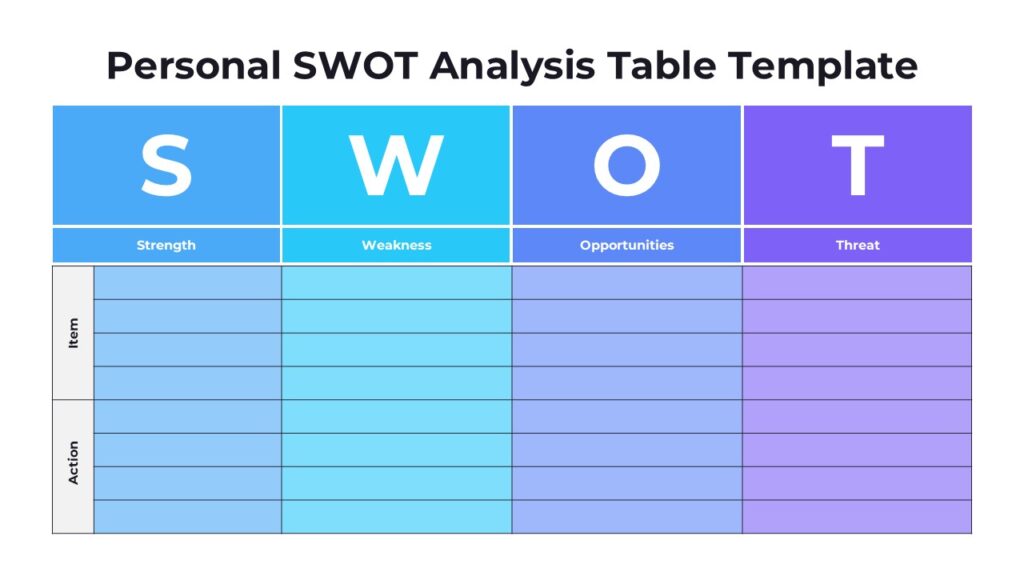
This free personal SWOT analysis template is a fully editable presentation designed to help individuals assess their strengths, weaknesses, opportunities, and threats in a clear, structured format. The table-based layout organizes your analysis into four equal columns with dedicated rows for key points and action steps, making it easy to move from self-reflection to concrete decisions. Compatible with both PowerPoint and Google Slides, it is ideal for students, professionals, job seekers, and anyone working toward personal development, career planning, or academic goals. Its clean, professional design works equally well for personal use, coaching sessions, and guided classroom or workshop environments.
- Editable Personal SWOT Analysis Template
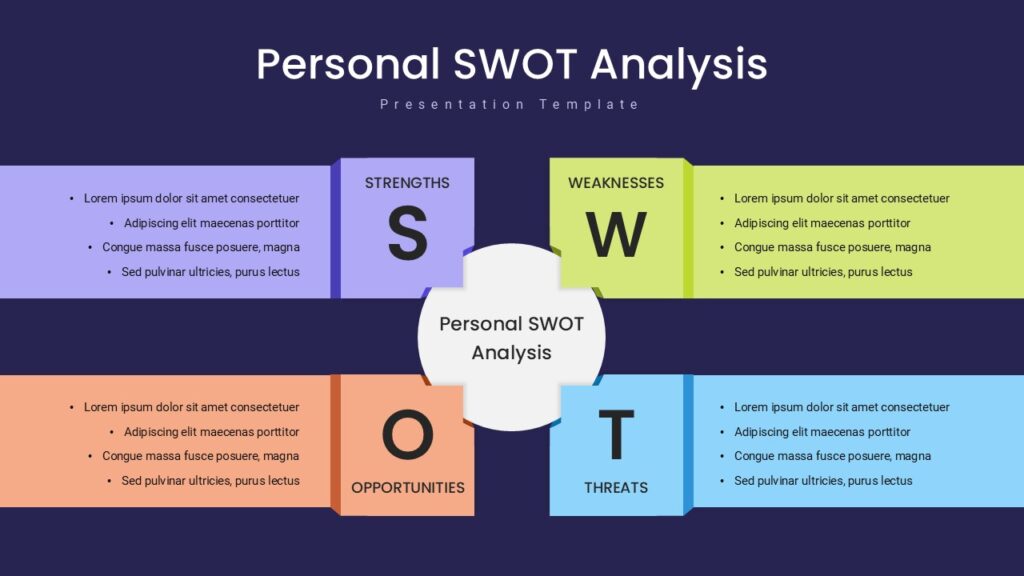
This fully editable personal SWOT analysis template offers a clean, color-coded four-quadrant layout that makes it easy to visually map strengths, weaknesses, opportunities, and threats in one organized slide. Designed for seamless use in both PowerPoint and Google Slides, it features customizable text areas, modern typography, and a balanced structure that transforms self-assessment insights into a compelling visual story. Whether you’re a student, professional, job seeker, or coach, this template supports a wide range of goals — from career planning and interview prep to academic reflection and performance reviews. Its polished, professional design ensures your analysis is both easy to scan and presentation-ready.
Conclusion: Start With One Goal, One Honest Analysis
The real value of conducting a personal SWOT analysis is not the document itself. It is the clarity it forces you to create. When I did mine properly for the first time, going deep on each quadrant and connecting every entry back to a real goal, I realized I had been investing energy in entirely the wrong places. I was building on a strength that did not serve my actual goal and ignoring a weakness that was quietly limiting my career growth.
That is what this framework does when you take it seriously. It helps you understand where you are, what you can use, what you need to fix, and what is coming from the outside. A personal SWOT analysis is a powerful tool precisely because it can be done in 30 minutes and still produce insights that shift the direction of your next six months.
So here is where to begin. Pick one goal you are actively working toward right now. Grab a free SWOT analysis template from SlidePick. Spend 30 focused minutes going through the steps I have laid out here. Write specific, honest entries in every quadrant. And before you close the page, commit to one concrete next step.
That next step is where the personal SWOT analysis stops being a reflection exercise and starts being a plan that actually moves you forward.
FAQ’S About Personal SWOT Analysis
A: A good swot analysis example for a student is always goal-specific. If your goal is landing an internship, your strengths might be strong academics, your weakness a lack of work experience, your opportunity an upcoming career fair, and your threat heavy competition. The best swot analysis examples for students start with a clear goal. Without one, every entry ends up too vague to act on.
A: It does not need to be long. Aim for three to five specific points per quadrant. A well-done swot analysis example fits on a single page or one slide. What matters is not length but honesty. Five concrete entries per section will always beat twenty generic ones.
A: Yes, and most people overlook this. Running a personal SWOT analysis before a job interview helps you speak clearly about your personal strengths, address weaknesses confidently, and connect your skills to what the role offers. Most interview questions map directly onto the four quadrants anyway. Having a completed swot analysis example during prep means you never blank on those answers.
A: Every three to six months is a good rhythm. Your strengths grow, new opportunities appear, and old threats shift. If you are going through a career change or a major personal goal, that is always a good trigger to run a fresh swot analysis example from scratch. Treat it as a living document, not a one-time task.
Related Articles
 January 3rd, 2026
Create a High-Conversion Sales Pitch Presentation in 2026
Business Presentation Tips- March 25th, 2026
What is a Project Status Report?
Business Presentation Tips - January 27th, 2026
How Do You Pitch a Business in 60 Seconds? The Complete Framework for Founders
Business Presentation Tips